Since I have been walking far more than usual I feel qualified to serve as an expert on being outside. Let me tell you, the outdoors has a lot of things going for it. One thing not in its favor is that it is boring as shit. When it comes to entertainment, indoors beats outdoors by KO in the very first round. Think Ronda Rousey vs Gina Carano. Inside, I have my computer with blazing fast internet access. Streaming MLB Network and full audio for all 30 teams. Xbox series X. As Jimmy Buffet would say “an air conditioner for when I’m hot, a radiator for when I’m not”. All a person could ask for.
Outdoors has grass and sidewalks. Clouds and the relentless scorching sun and the outside of buildings that are temperature controlled only on the inside. All things that are fine the first few times you see them. But the three thousandth? Not so much. I never saw a tree that could play Disco Elysium or listened to Songs In The Key Of Life from a conch shell. The fact that being outdoors often sucks is making it tougher and tougher for me to properly train. I am in need of a solution. Something I can do outside that can compare in some small way to binge watching Abby Labar on Quick Pitch or DarkViperAU on YouTube.
After looking over some new outdoor hobbies for all of fourteen minutes I decided to take up birdwatching. You should have been able to deduce that from my post title. As with anything new I attempt nowadays, the first thing I did after making my decision was to head over to the r/birdwatching subreddit. Those guys don’t make birding seem that hard. You go outside. You see cool birds. You photograph them. You figure out what kind of bird they are. All you need to get started is the ability to leave your house (check), a pair of binoculars (check), and a camera phone (check). I can handle this.
So the very first thing I noticed is that birds are really fast. And jumpy. If you get close to one and then try to whip out your phone to take a picture they will inevitably get spooked and fly off at 100 mph. I searched on the internet for the best way to overcome this. I searched for things like “how to get close to birds and take pictures without them noticing you”. I found one interesting site by a British guy. It got kind of weird and pervy. Not much I could use in my birdwatching life, but maybe some pointers I can add to my everyday life as a weirdo.
As I’ve mentioned before, I am a crappy photographer with a crappy camera on a crappy phone. It has only been since I took up birding that I realized I’ve been using my camera zoom incorrectly. The camera UI has a button that says “1X” for the zoom and when you push it the camera zooms in and it says “2X”. Push it again and it goes back to saying “1X”. Therefore, I logically assumed my camera could only zoom in 2X.
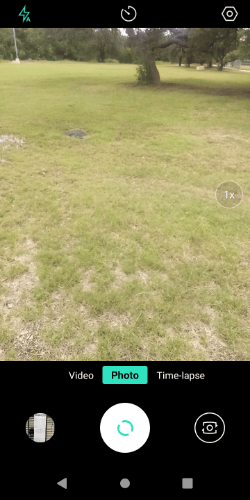
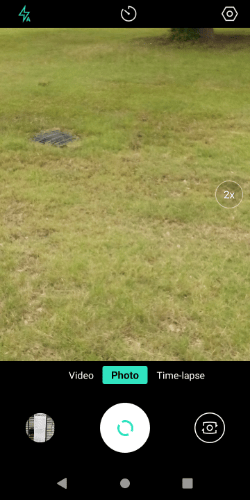
Not so fast my friend. It turns out you can use your fingers to unpinch the camera and extend the zoom up to “4X”. There is a trade off in quality at that zoom level. Considering how poorly my pictures normally look it doesn’t take a rocket scientist to realize the pics I’m about to show you look like they were taken with a tiny hole cut into a shoebox. You have been warned.
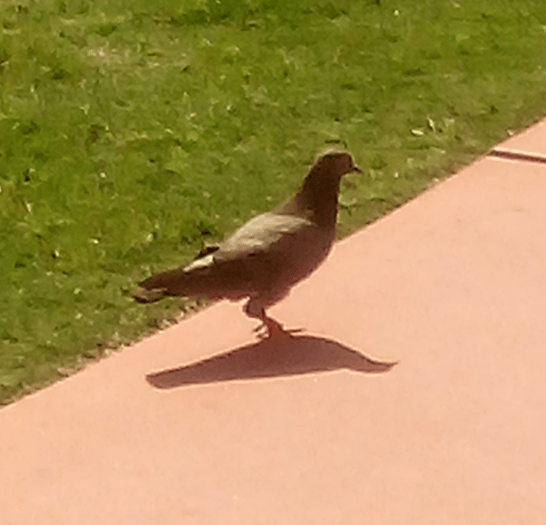
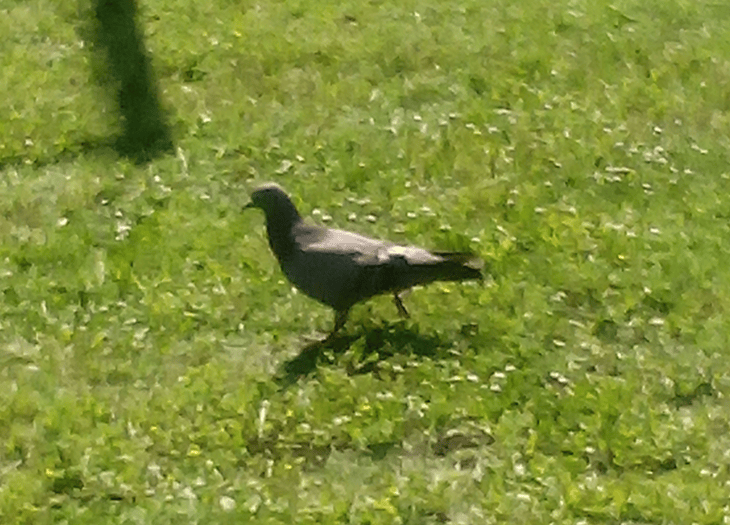
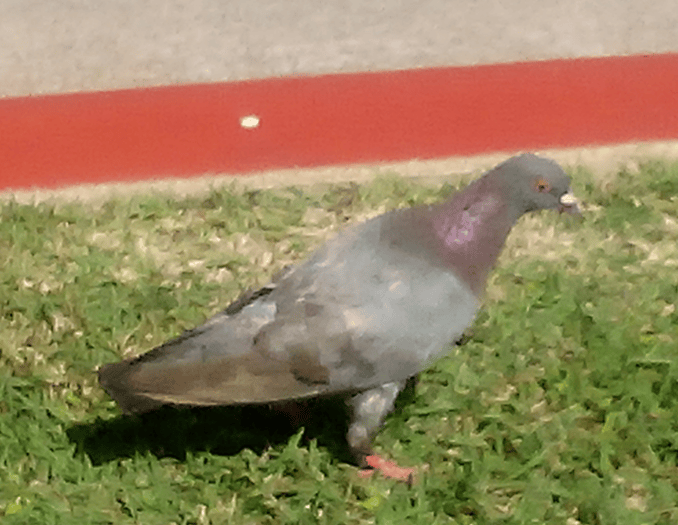
First up we have to choose the humble pigeon. The most ubiquitous of all the urban birds. I was able to get lots of shots of these guys in their natural habitat like gas stations, power lines, and big puddles in parking lots. Because of their ubiquity, you’d be excused for dismissing pigeons as uninteresting creatures. But they are actually fascinating birds with a complex social structure and unusual quirks, as shown in this documentary from last year on PBS.
For example, both parents are able to feed their chicks a form of milk that they produce from a gland in their throat called a crop. Pigeons also are able to … WAIT, WHAT? Milk from a pigeon? I thought only mammals made milk. Do pigeons have nipples? Can Greg milk them?
Pigeons are one of a few types of birds that produce crop milk. Both sexes secrete this fluid which contains IgA and is high in protein, just like mammalian milk. Crop milk production begins just before the chicks hatch and it looks sort of like cottage cheese. There is no proof to the rumor that raw crop milk is a nutritional panacea or that it is a great way to wash down your daily dose of ivermectin.
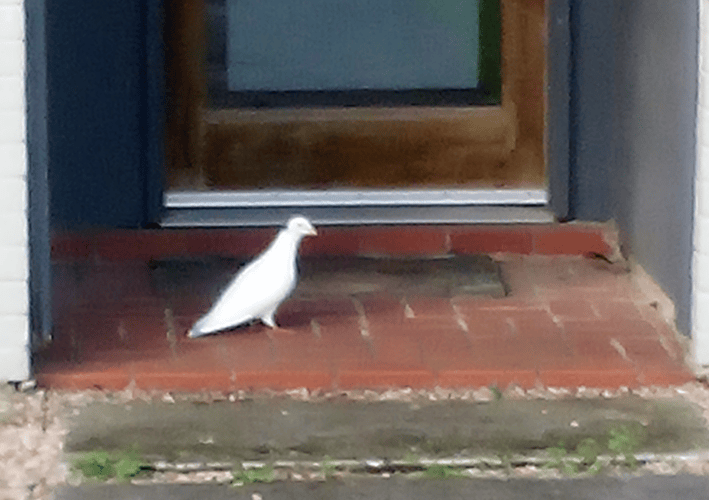
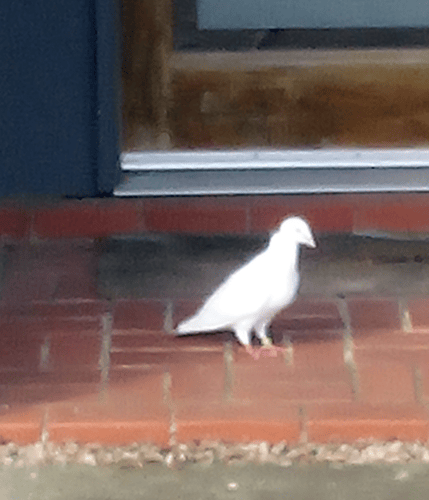
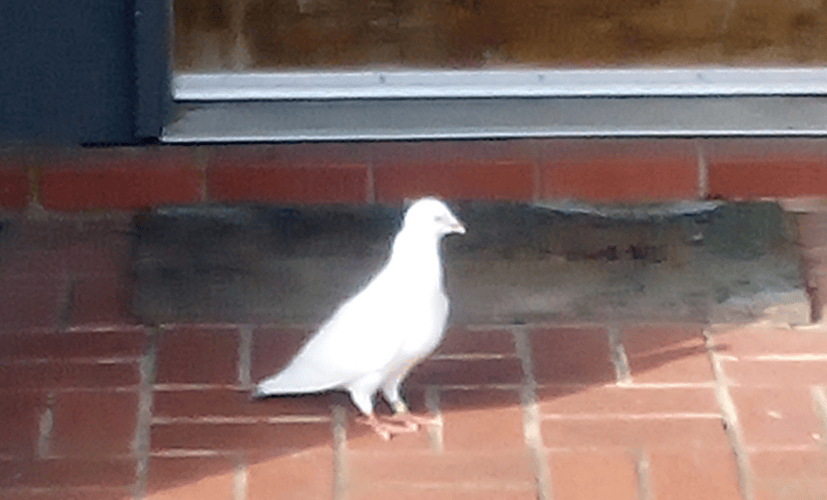
These are some interesting shots I got of a white pigeon. I saw this one sitting in a doorway and expected it to fly away when I took my camera out. Far from it. This little birdie basically sat there and posed for me. They did their little turn on the catwalk and everything. I actually started to get scared that they were injured and unable to fly away. That was not the case though, as they eventually flew off after getting bored of hitting various poses.
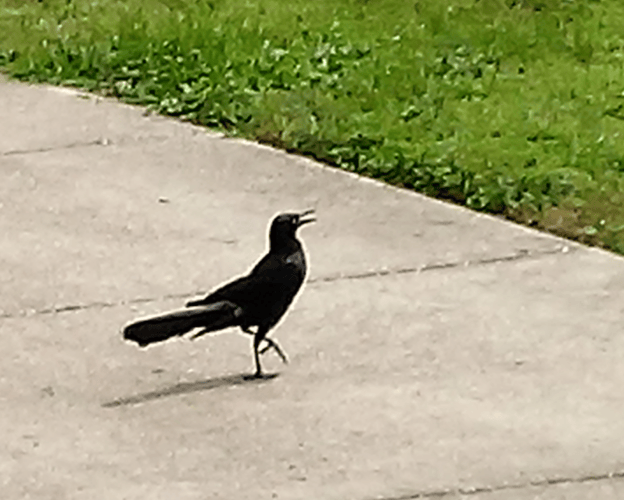
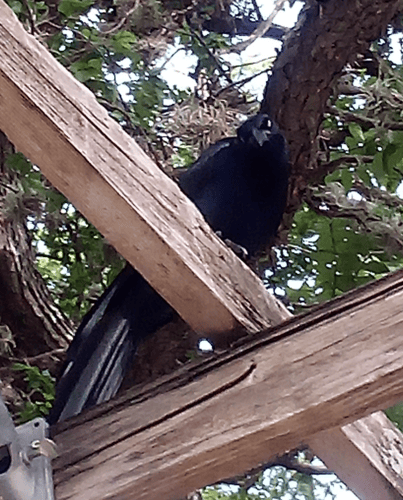
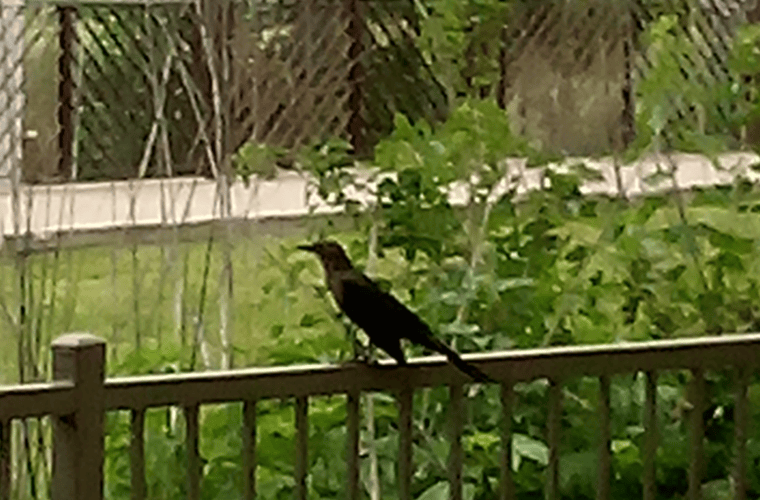
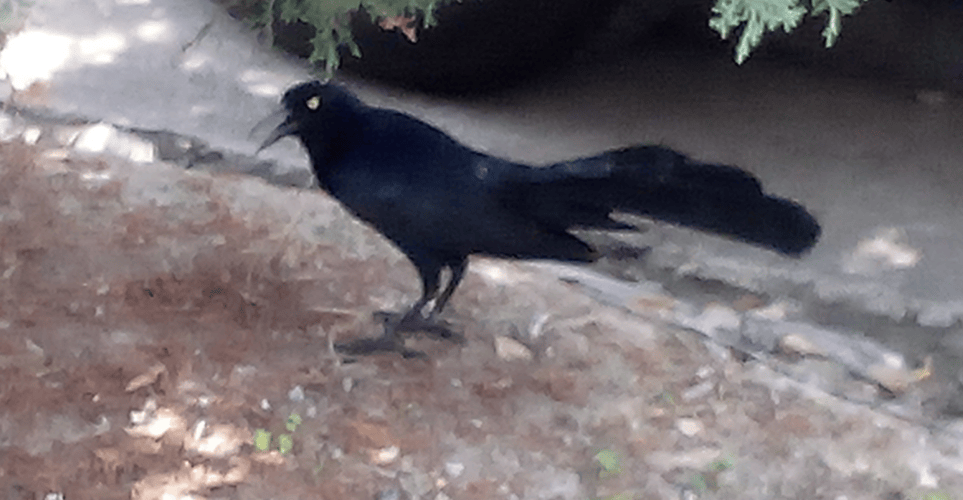
Next up we highlight the grackle. This bird is also common in urban settings and fairly unfazed by human activity. This allowed me to get closer to these birds than any others. You’ll recognize this bird by its dark, shiny, iridescent coat and the fact that it sounds like someone started a jet-powered lawnmower in your yard. The big, dark ones are the males. Females have a more muted, brown tone and are significantly smaller.
Here is a group shot of multiple birds I captured in a picturesque urban setting. A Valero parking lot off of I-35.
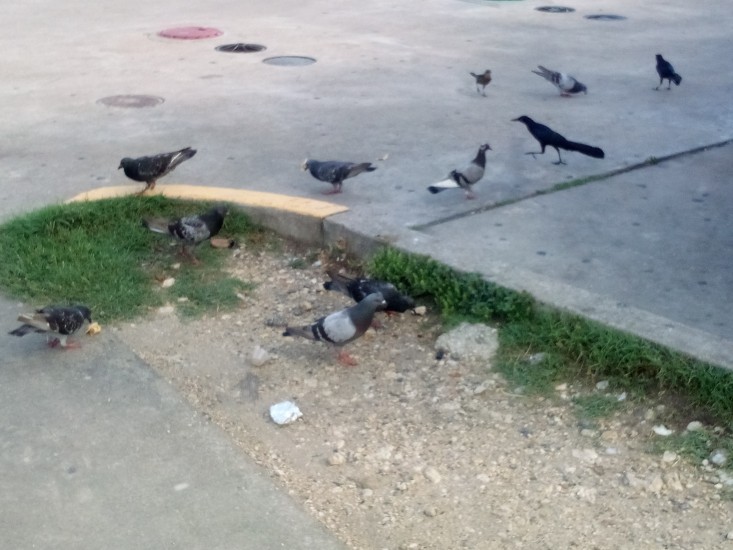
Lastly here are some pictures of white-winged doves. If you are only familiar with these animals from Stevie Nicks lyrics it will surprise you to see that they are basically brown as dirt.
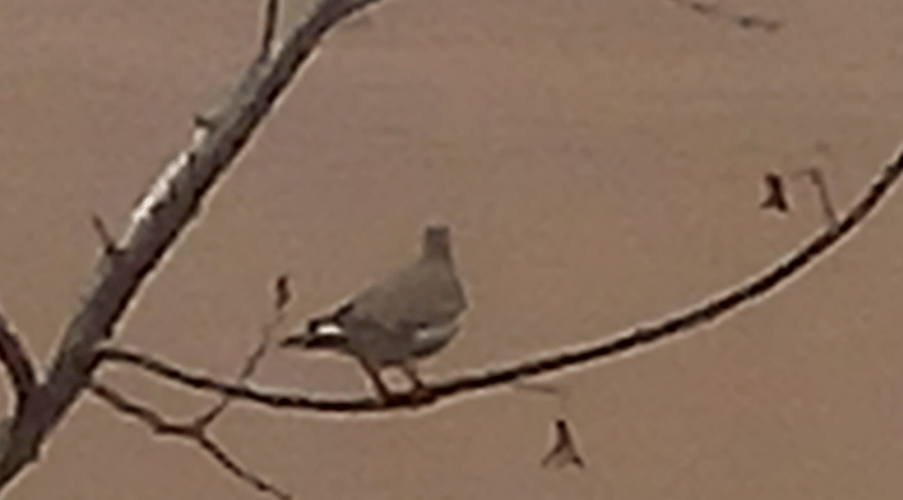
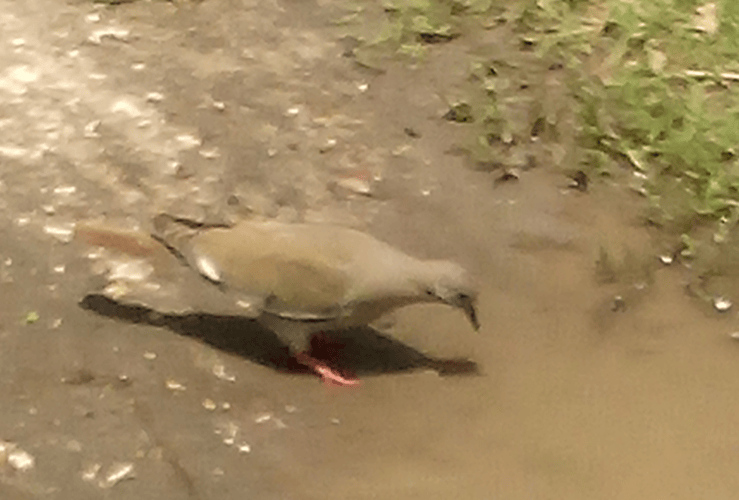
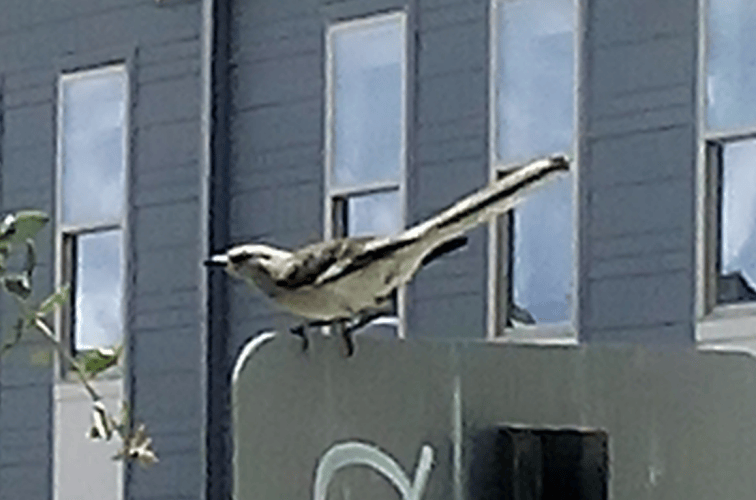
When they are perched you can only see a very small portion of their white feathers. Once they take flight, the white pops out and creates a staggering visual. Of course, I am not yet advanced enough to get pictures of moving birds so I’ll need you to take my word for it. Actually, never mind, I can just link to some pictures someone else has taken to show you what I mean. Much easier.
Thus concludes introductory birdwatching. I feel like I am now ready to start photographing some of the many jays, woodpeckers, and owls in central Texas. I need to continue improving in a hurry because fall migration begins as early as mid-August and should peak around October in this area. With any luck by then I will be able to apply everything I’ve learned and capture even the most elusive of birds.

 Gene Hikes the Appalachian Trail