Tag: mental-health

  • Hiking and Resilience

    I’m pretty sure it was Yogi Berra who said ninety percent of hiking is half mental. Don’t fact check me on that. The point he may or may not have been trying to make was that you can be as fit as possible and have your loadout as ultralight as possible, but if the space between your ears isn’t where it’s supposed to be you will struggle on your hikes. If I was Yogi I would have said a good hiker needs to be resilient.

    The best way resiliency has ever been described to me is trying to make yourself like a tennis ball. It is easy to slam a tennis ball and see the thing deform, but it always bounces back to basically its previous state. When adversity occurs it can mess with you in horrible ways, and that is okay. Resilience isn’t invincibility, resilience is the knowledge that you can survive adversity and the ability to come through on the other side.

    In the Army we did a lot of resiliency training to help withstand the difficulties of everything we’d do and be able to train our brains to cope with overcoming unexpected obstacles. In every unit you had (or were supposed to have) at least one Master Resiliency Trainer, who took a ten day course to become the subject matter expert and give the required training to Soldiers. Resiliency training was twelve modules, so once a month, and after a year you started over again with the first module. Therefore, if you were in for more than a few years you got really used to the training. In fact, the resiliency tactics you learned were valuable to handle having the same resiliency training for the sixth or seventh time. In the most recent AR 350-1, resiliency training was scraped after the service labeled it as “outdated”.

    I agree that a fair amount of the mandatory training we did was tedious and unnecessary, but a good deal of it was extremely advantageous. I was never a Master Resiliency Trainer but, as an NCO, I frequently dealt with issues where resiliency helped Soldiers tremendously. I had many fellow NCOs and junior Enlisted who told me they gained helpful insights and ways of looking at problems and opportunities because of the training they received.

    Of those twelve modules I mentioned earlier, four seemed particularly beneficial. They are delineated in Table 4 of this academic paper about how to improve resiliency education:

    • ATC
    • Avoid Thinking Traps
    • Detect Icebergs
    • Hunt The Good Stuff

    I’d like to briefly go over each of these concepts as sort of an introductory course in resiliency for hikers. Maybe the training skills you learn can help you find the inner resolve to keep going on that inevitable day when it is pouring rain and your poncho has a hole in it and you get poison ivy on your junk and ants get in your last package of Oreos.


    ATC

    ATC stands for Activating Event ↦ Thoughts ↦ Consequences. This is the model for how we get into bad mental habits that undercut our ability to handle stressors. Inopportune things happen, no amount of mental or physical training can prevent that. What leads to bad results isn’t the fact that something happened as much as the bad thoughts we have about those things. The undesired consequences are the result of negative thought processes, not of the events themselves.

    The consequences referenced in the ATC model can be binned into emotions and reactions. Emotions are the primary feelings you feel after your initial thoughts. These emotions, like anger or frustration, can also be accompanied by physical changes like sweating or feeling numb. Reactions are how you express your emotional response to the world. Do you lash out like a Karen and make things worse? Can you be self-aware and keep a cool head?

    So, the obvious question is how can you control these thoughts. That leads right into the next resiliency concept.

    Avoid Thinking Traps

    Thinking traps are the preconceived notions we apply to scenarios in our heads immediately after activating events occur. These traps lead you down the roads with bad consequences at the end. Being conscious of traps allows you to mentally sidestep them. One of these is called “mind reading”. We either expect others to be able to read our mind or try to read someone else’s mind instead of just talking to them to find out what they think. Another one I know many people deal with is “always, always, always”. It is the thinking trap that assumes bad things will happen to you no matter what, so why try and fight it. Psychologists call this one “learned helplessness”.

    The thinking trap I deal with the most is “me, me, me”. The belief that everything negative that happens to me is due to my personal failings. The hardest thing for me to do is not blame myself whenever something goes wrong. I have to aggressively remind myself that other people can sometimes fail. I’ve seen Mariano Rivera blow saves. I’ve seen Dan Marino overthrow completely open receivers. I’ve even seen Nathan MacKinnon whiff on a wide open net. Trigger warning on that link for my Canadian friends.

    Detect Icebergs

    Okay, stop me if you’e heard this one before. The thing about icebergs is that there is a large portion above the water, and there is an even bigger part of it below the water where you can’t see it. Truly mind blowing, for those of you under the age of 13.

    Kidding aside, the Detect Icebergs module is all about how your core values and beliefs can affect your actions. These core values and beliefs are embedded so deeply into your psyche that they are basically hidden away from your conscious. The way you detect them is by asking “what” questions instead of “why” questions.

    “Why” questions focus on feelings but stay on the surface level of an issue. “What” questions force us to go deeper to find the root cause. For example, if someone says something that upsets me I can ask myself “why is that upsetting”. This will lead me to defend the fact that I am upset without getting any more insight. Asking “what part of that is upsetting” compels me to critically evaluate what happened and look further within my own beliefs and values for an answer.

    Icebergs are not all bad, in and of themselves. Let’s say you have a core belief that you should save as much money as you can. That is an admirable goal, especially in today’s economy. If something goes wrong with your car, your core belief might lead you to find the cheapest, dodgiest mechanic you can find. That might cost you even more in the future. Better to recognize your iceberg, decide to spend a little more on a more competent mechanic, and get your car fixed right the first time.

    Hunt The Good Stuff

    Resilience isn’t found only in mitigating the bad. There is joy in acknowledging and celebrating the good. Sometimes the exact thing you need when times are tough is to remember when they weren’t tough. Or maybe thinking about the good things that are the reason you suffer through the bad things.

    Reflecting on good things doesn’t just feel good. Being in a good mood leads to better outcomes in physical health, relationships, and mental health. The same psychologist who coined the term “learned helplessness” wrote a book called Learned Optimism about the power of positive thinking. Hey, that would be a pretty good book title too.


    Resilience is more than just these four modules (obviously). If you are interested in more information about resilience, whether for hiking or any other reason, here are some helpful resources:


  • Why I Run

    Being into running is a lot like going to Harvard or being from Texas. You never have to ask somebody if they are any one of those things. They will make sure you know pretty much as soon as you get introduced to them. I feel like every self-indulgent asshat that runs has some profound story about how they got into it. I am no different.

    There were two specific moments that made me into a runner. The first one got me into running to begin with. The second one made me pursue distance running, by which I mean going beyond 10k races and ultimately running a marathon.

    The first instance was in May 2001. I was living in southern California at the time, which I did for a little over a year. Looking back, I feel like that year was definitely the worst one of my life.

    In my teens, my mother had quite a few physical and mental health issues which caused her and my dad to become estranged. They got back together and moved to a suburb of Los Angeles in 1996 but her overall health did not significantly improve. In 2000 I decided it would be a great idea to quit my job in Boston and move to California to help out. In my head I figured I’d move in with the folks for a couple months, get a nice job, and move into my own place somewhere close to them. The reality was nowhere near that.

    I left a pretty sweet job at Monsanto where I extracted DNA from plants all day. That was the whole job. Show up at 8am and cut leaves off plants. Grind them up with mortar and pestle, then breakdown the plant material and go to town on them with Qiagen kits. At around 3:45pm take all the different Eppendorfs full of DNA to the spectrophotometer and record the concentration in μg/mL. Easy peasy. My dumbass figured I could find another job like this someplace in Los Angeles.

    Truth was Los Angeles had basically zero biotech, and I wasn’t qualified to do much else. I couldn’t find a job quickly and a couple months became several months. I wallowed on the floor of my parents’ place and grew to resent them for no reason. They never told me to quit my job and move across the country, but if I didn’t blame them for my predicament then I would have to blame myself. This did irreparable harm to my relationship with my folks that never got undone. My mom and I only spoke about twice a year until she died in 2018. My father and I have barely spoken since her funeral.

    Being in this mental state obviously affected my physical state. I never really got fat but I got “skinny fat”. Not really doing anything just made me a doughy, pudgy, weak person. So that is where I was at come May 2001.

    Despite how horrible living in L.A. was, I did have two good friends from college who also lived out there. One of them was the poster boy for jocks. If they were casting Stan Gable from my stable of friends, this guy would be it. Tall, good looking, great at every sport the moment he picked it up. A Chad before the term Chad existed. To protect his identity, I’ll refer to him as Chad from here on out. The only joy I had in my life was when I would go to their place on the beach and get black out drunk. On Memorial Day weekend a mutual friend of ours from college came to Cali to hang out for the long weekend.

    The friend who was visiting was always our “fat friend”. He was the jolly, lovable dude with the big love handles on the side. I’ll call him Albert for the duration of this post. Well, since college he had been working hard on himself and lost the weight. He was looking svelte and trim and we were all genuinely happy for him. We did lots of partying and reminiscing on or near Hermosa Beach that weekend. Albert, Chad, and I went to a local park to play some basketball in between bouts of heavy drinking.

    So the three of us decide to play some 21 (which is like 1-v-1-v-1 basketball, first person to 21 wins). Chad obviously wins, but Albert and I keep it respectable. Something like 21-19-18. We decide to play again. This time the scores were 21-18 … to 6. Guess who was the 6?

    Early in that second game my everything gave out. Fuel level dropped to zero. My lungs were burning and my legs felt like they weighed 500 pounds. I could barely move and thought for sure I was seconds away from having a stroke or catching fire. After the second game I had to beg out and sit on the sidelines while Albert and Chad continued playing one-on-one.

    You know how they say you never remember the exact details of the most important moments of your life, but you never forget how you felt? Well, I don’t remember anything about who actually won that game or any of the particulars that happened. But I remember every single emotion that went through my head sitting there sucking down Gatorades and watching my “fat friend” and my “jock friend” living a life that was entirely beyond me. Shame, disgust, powerlessness, depression. I swore I would do everything in my power to change this.

    The very next day I started running. The first day I went about a half mile before I had to stop and walk back home. The next day I went a little farther. And the next, and the next, and the next. Soon I improved enough to get all the way to a local track over a mile away. Then before I knew it I could go to the track, do some laps, and then make it back home. I decided to sign up for a 5k in July. I ran that in about thirty minutes and then signed up for a 10k in August. That was around 57 minutes. Both were PRs at the time.

    My friends were nothing but supportive as I started running. Chad even gave me a $20 gift card for fogdog.com. For those of us who remember fogdog, it might be time to take our rheumatism medicine. They were an online sporting goods store in the late 90s dot-com boom when simply adding “.com” to your name made your stock price triple. Dot-com then was basically what AI is now.

    In September I moved back to Boston and continued on with my life. I got a job and my own place like an actual adult. Running stayed a significant part of my fitness routine and I still ran the occasional road race (shoutout to the Somerville 5K and Gobble Gobble Gobble). I pretty much stayed around 3-5 miles a day until the second specific moment.

    Fast forward to summer 2008. My Army Reserve unit got put on orders in Boston to prepare for an imminent mobilization. To say we were excited would be an understatement. We trained in and around Boston, and went on extended trips to Fort Hunter-Liggett and Fort Irwin. Everything was trending towards the mobe into autumn. Then all of a suddenly the mobilization got cancelled right before Thanksgiving. They didn’t need us to win the war after all.

    This was devastating for most of us. Lots of folks in my unit worked for small local companies that did not have enough employees to qualify for USERRA protection. I was working for a start-up with 4 employees so I also became unemployed just before the holidays.

    The holidays are my worst time for binge eating. Even when everything is going great for me, it is really tough to avoid a few extra pounds. This particular year a few pounds turned into a lot of pounds. I sat around at home and ate and felt depressed. I felt ashamed and embarrassed having to explain to my friends and family that I was staying in the continental US. Like I was scared they would think I had lied about the whole thing.

    I did not realize how bad I let everything get until I got chosen to attend Basic Non-Commissioned Officer Course (BNCOC, pronounced “bee-knock”) in February 2009. I had to do a preparatory physical fitness test in Boston and, while I passed everything, the numbers were down from my usual. Then when I got to Fort Dix for BNCOC I was over the limit on my weigh-in. Fortunately I made the body fat tape test on the number. I literally was at the highest body fat you could possibly be and still be able to complete the course.

    Once I graduated and got back home I knew I needed to do something to get my waistline and life back under control. I figured I could do worse than turning to running to achieve that again. This time I wanted to up the ante and decided to sign up for the Army Ten Miler in October.

    Army Ten Miler was a great experience, but my run that day made me feel like I left a lot of meat on the bone. I really tired out after about mile 8 and slogged my way to the finish. Once I got home I knew I needed to completely remake my stride if I wanted to do longer runs. And I wanted to do longer runs.

    In the winter of 2009-2010 I totally broke down my running style and became the most biomechanically efficient version of myself. In May 2010 I ran the Providence Half Marathon and then in October 2010 I did the Marine Corps Marathon. For me, running a marathon is a binary experience. Once you do one you never need to do another. That said, I continued distance running recreationally and have done several half marathons and ten milers since, but nothing that long since 2022.

    Running helped me improve my life and physical fitness. It is not a panacea. I am a firm believer that the most important workout you do everyday is in your kitchen. If you want to run to lose weight, be prepared to put in way more effort preparing meals than pounding pavement.

    When I ran the marathon I could look at a piece of chicken breast from the other side of a room and tell you everything there was to know about its calories and macronutrient content. I weighed 142 pounds on race day and felt like a strong crosswind would legitimately knock me over. That sort of shit isn’t for everybody and I never want to be that small again.

    I know a lot of people run for mental health reasons. More power to them. I have never used running for that. Lots of people talk about getting the “runner’s high”, but not me. The only time I feel joy about my run is as soon as I finish because I know it is the longest possible time until I need to run again. If I knew of something else that could give me the same aerobic and endurance benefits, with the advantage that it can be done anywhere, I’d switch as fast as possible. Pun intended.

    But anyway, those are the reasons why this self-indulgent asshat runs. Yours might be similar or they might be different. I’m certain whatever they are, they are just as important to you as mine are to me.

    Not the author. Photo by Nicolas Hoizey on Unsplash

  • Happy Twentieth Birthday

    Photo by Wiktoria Skrzekotowska on Unsplash

    September 4, 2006 was twenty years ago today. I celebrate that day each year because it is the day I quit smoking. Or, more accurately, it is the most recent day I quit smoking and the first time I did not start smoking again within a few months. I treat this date as though it is another birthday because quitting smoking gave me a new lease on life. And I didn’t even need to do a credit check and put down a security deposit for this one.

    I started smoking fairly late for someone who grew up in the rural south. I never smoked in high school despite my dad smoking over a pack a day for my entire life. Some of my earliest memories of my dad are of me sitting on the floor playing with toy cars while he filled the entire room with smoke that I imagined was the cool fog my mini racers were navigating on their obstacle course that included our coffee table and the legs of his chair. I never took up smoking until late in college, but I quickly made up for lost time. Smoking is one of those things you understand is disgusting and bad for you the entire time you participate, but because it is an addictive drug you are powerless to do anything about it.

    Marlboro Reds were my cigarette of choice. I loved Reds more than baseball fans in Cincinnati. Every time I smoked a cig that wasn’t a Red, I would think of how much better a Red would be. I was able to keep my habit down at about a half pack a day for the decade or so that I smoked. I tried to quit many times. Or, to be more accurate, I actually did quit many times. I just started back up again after a few weeks or months.

    I remember when Boston outlawed smoking in bars back in 2003. I was certain that was going to be the tipping point and I could easily quit if the bars were off limits. Fast forward to me standing around in the freezing cold outside of the Druid in Inman Square taking drags and shivering my ass off.

    I kept trying to quit many other times. Being in the Army sabotaged my attempts as much as anything else. I got to the point that I could quit for the entire month, but come drill weekend I just had to get a pack to smoke in order to make it through the day. One pack to survive the weekend would become a few packs to survive the entire week of, which eventually just became me starting to smoke all over again.

    I know now that my whole problem was that I never really wanted to quit for me. I wanted to quit because cigarettes cost a lot of money. Or I wanted to quit because society told me I should quit. Those were external motivations, and they just weren’t good enough for me. I never actually wanted to try and quit purely for myself until I realized just how destructive it was for my own life.

    Ben Affleck puts it very well in an interview with Howard Stern. Here, he talks about how he was not able to quit drinking until it all but ruined his life. “The cure for addiction,” as he states, “is suffering.”

    In summer 2006 my Reserve unit went to Fort McCoy in Wisconsin for Annual Training. We were there for an exercise with many other Chemical units around the country. On the way there I bought two cartons of Reds, expecting them to last the entire two week trip and beyond. I was wrong.

    I’m not sure what was different about this AT that made me smoke so much more than usual. Yes, it was hard, but AT was always hard. There was a lot of “hurry up and wait”, but that was also nothing extraordinary. Whatever it was, all I did was smoke and smoke and smoke. In two weeks, I smoked both cartons. A carton is ten packs of cigarettes, each pack containing twenty cigarettes. And yes, I did lend lots of smokes to people, but I also bummed at least as many from others.

    Basically I smoked a pack and a half each day. An explosive increase from half a pack a day. Once I got home I knew there had to be a major change. I did not want this to be my new normal. I did not want to get cancer before 40. I did not want to have trouble climbing two flights of stairs.

    The first thing I did was set a date. I chose Labor Day because it was the end of a long weekend. I spent the weekend smoking more than normal, hoping it would cause me not to miss smoking for the first couple of days. On Labor Day itself I went to Olde Country Buffet and got a gluttinous meal of meat loaf, more meat loaf, fried chicken, red velvet cake; all the normal stuff you get at Olde Country Buffet. A few alcoholic beverages were consumed as well. I did my best to make the entire weekend feel like a bacchanalia of vices.

    For the most part it worked. I spent most of the following week just recovering from all the overindulging. Probably the hardest part was not getting three or four ten-minute smoke breaks at work. I never missed cigarettes until the next weekend. By then I could tell myself “you’ve already made it four days, keep going”.

    Because I had so much resolve this time, it continued to go smoothly. My first drill after quitting was tough, just because when I told people I quit they didn’t believe me. So they spent the whole weekend trying to shove lit cigs into my mouth. Other than that, I would occasionally see someone smoking and get an overwhelming feeling of envy. It felt like an itch on my heart. I just desperately wanted to steal that person’s cigarette and smoke it for myself. This happened every few days initially, then slowly got progressively further spaced out. Even now I still get that feeling once every 9 months or so.

    The biggest downside was weight gain. There is a reason every thin, beautiful, eastern European supermodel smokes like a chimney. I slowly put on pound after pound despite doing and eating exactly what I did before. That frustrated the shit out of me, because I was supposedly getting healthier as I watched my pants get tighter and tighter. I put on about 12 pounds before I finally got a handle on it around Thanksgiving, then I needed a few months to lose it all back.

    The second biggest downside was that I picked up spitting outdoors. Like, all the time outdoors. I had developed an oral fixation with the cue that being outside meant my mouth needed to be busy. When I stopped smoking I started spitting all the time, but only outside. It’s pretty fucking disgusting but I have no idea how to stop doing it without smoking again.

    The positives are great. I save tons of money that I used to spend on cigarettes. My health and endurance are as good as I could hope. It has truly been a complete life transformation, and that is why I treat it as a second birthday.

    Of course, having a birthday on 9/4/06 means I share a birthday with the Queen Bey herself. For my 20th birthday and her 45th, we need to have a dance party celebration!

  • Worst Fear: Alpha-gal Syndrome

    The idea of spending five months walking with a heavy pack on, sleeping outside in all types of weather, and foregoing the comforts of home can sound scary. It definitely does scare me on occasion when I think about it. But, like, it scares me in a good way. Like, an I believe this will be challenging but I can handle it, kind of way. There are other things about the trail that scare me in a different way.

    I am a very risk averse person by nature. I’ve never been on a roller coaster, I’ve never scuba dived. I’ve only been outside the continental United States twice (once to Montreal and once to Puerto Rico). The reason I never take risks is because I always play out the absolute worst thing that can possibly happen over and over in my head until I’m convinced it will. Do I want to stand on the edge of this moderately high building? No, because the exact second I decide to stand there I will get hit by a minor vortex that lifts me over the edge and drops me onto a giant pile of broken concrete and rusty safety razors and horse dung. The very fact that nothing like this has ever happened to me just reinforces the idea that my abundance of caution is the reason why.

    I have several very specific fears about things that may happen to me on the Appalachian Trail. They range from the plausible to the irrationally unlikely. But rest assured that wherever on that continuum they lie, I remain equally concerned about them. Perhaps writing them out here in my blog will help to allay my fears. For my first specific fear I have something that is very real and even likely to occur. Fortunately, it is also easily preventable with care and discipline.

    My first fear (that is first chronologically, not first in terms of the amount of heebie-jeebies it gives me) is alpha-gal syndrome. Alpha-gal syndrome is an allergic disease caused by a tick bite. Being bitten causes you to develop an allergic reaction to galactose-α-1,3-galactose (also known as alpha-gal). That carbohydrate is found in the meat of most mammals, which means once you get it you will no longer be able to eat beef, pork, or most other meat. Alpha-gal is not found in humans, so Soylent Green would still be okay to eat. In the worst cases, people with the syndrome are not able to consume dairy like milk or yogurt either.

    The idea of an allergic reaction to alpha-gal is not unknown. What is scary is the idea of becoming allergic to the molecule after you eat it and it circulates in the bloodstream. Alpha-gal is the main reason why pig organs are rejected during transplantation into people. Our antibodies attack the carbohydrate and cause the organs to fail. Fortunately, scientists are engineering xenotransplants which lack that molecule.

    Unfortunately, that does not matter with alpha-gal syndrome. When the tick bites you it can take up to several months to develop the reaction. The exact mechanism is not clear. The same tick could bite two people and one can get the syndrome and the other won’t. Once you have it, a few hours after you eat red meat the allergic reaction begins. No more steak or ice cream or hot dogs, for the rest of your life.

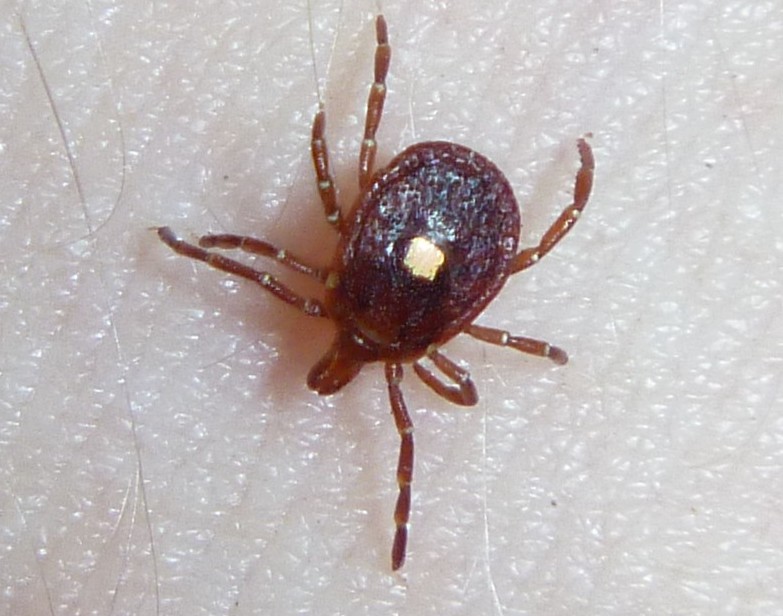
    Which specific ticks can cause this? Way too many. Lone star tick, blacklegged tick, and western blacklegged tick are all known or suspected to cause it. Where is the lone star tick located? Why, the eastern United States of course. Isn’t that where the Appalachian Trail is? No shit. When are they most active? April to September. Well, fuck my life.

    public enemy number one

    As horrific as this is, it can be easily prevented. Permethrin is a miracle compound. Our Army uniforms were impregnated with it and I can proudly say I never got a tick bite despite sleeping on exposed ground many, many times across the southeastern United States. It is also critical to frequently check yourself and each other for ticks when you have a chance. They like to hide in your underarms and between your legs, just like many perverts you encounter.

    There are not many things worse than getting alpha-gal syndrome as far as I’m concerned. As scary as it is, practicing good hygiene and insect prevention is the key to making sure it does not happen to me. There are more than a few other scenarios I will go over in the coming months that are in some ways even more scary than this. I can’t wait to tell you all about them.