November 2026
M T W T F S S
 1
2345678
9101112131415
16171819202122
23242526272829
30  
  • Hiking and Resilience

    I’m pretty sure it was Yogi Berra who said ninety percent of hiking is half mental. Don’t fact check me on that. The point he may or may not have been trying to make was that you can be as fit as possible and have your loadout as ultralight as possible, but if the space between your ears isn’t where it’s supposed to be you will struggle on your hikes. If I was Yogi I would have said a good hiker needs to be resilient.

    The best way resiliency has ever been described to me is trying to make yourself like a tennis ball. It is easy to slam a tennis ball and see the thing deform, but it always bounces back to basically its previous state. When adversity occurs it can mess with you in horrible ways, and that is okay. Resilience isn’t invincibility, resilience is the knowledge that you can survive adversity and the ability to come through on the other side.

    In the Army we did a lot of resiliency training to help withstand the difficulties of everything we’d do and be able to train our brains to cope with overcoming unexpected obstacles. In every unit you had (or were supposed to have) at least one Master Resiliency Trainer, who took a ten day course to become the subject matter expert and give the required training to Soldiers. Resiliency training was twelve modules, so once a month, and after a year you started over again with the first module. Therefore, if you were in for more than a few years you got really used to the training. In fact, the resiliency tactics you learned were valuable to handle having the same resiliency training for the sixth or seventh time. In the most recent AR 350-1, resiliency training was scraped after the service labeled it as “outdated”.

    I agree that a fair amount of the mandatory training we did was tedious and unnecessary, but a good deal of it was extremely advantageous. I was never a Master Resiliency Trainer but, as an NCO, I frequently dealt with issues where resiliency helped Soldiers tremendously. I had many fellow NCOs and junior Enlisted who told me they gained helpful insights and ways of looking at problems and opportunities because of the training they received.

    Of those twelve modules I mentioned earlier, four seemed particularly beneficial. They are delineated in Table 4 of this academic paper about how to improve resiliency education:

    • ATC
    • Avoid Thinking Traps
    • Detect Icebergs
    • Hunt The Good Stuff

    I’d like to briefly go over each of these concepts as sort of an introductory course in resiliency for hikers. Maybe the training skills you learn can help you find the inner resolve to keep going on that inevitable day when it is pouring rain and your poncho has a hole in it and you get poison ivy on your junk and ants get in your last package of Oreos.


    ATC

    ATC stands for Activating Event ↦ Thoughts ↦ Consequences. This is the model for how we get into bad mental habits that undercut our ability to handle stressors. Inopportune things happen, no amount of mental or physical training can prevent that. What leads to bad results isn’t the fact that something happened as much as the bad thoughts we have about those things. The undesired consequences are the result of negative thought processes, not of the events themselves.

    The consequences referenced in the ATC model can be binned into emotions and reactions. Emotions are the primary feelings you feel after your initial thoughts. These emotions, like anger or frustration, can also be accompanied by physical changes like sweating or feeling numb. Reactions are how you express your emotional response to the world. Do you lash out like a Karen and make things worse? Can you be self-aware and keep a cool head?

    So, the obvious question is how can you control these thoughts. That leads right into the next resiliency concept.

    Avoid Thinking Traps

    Thinking traps are the preconceived notions we apply to scenarios in our heads immediately after activating events occur. These traps lead you down the roads with bad consequences at the end. Being conscious of traps allows you to mentally sidestep them. One of these is called “mind reading”. We either expect others to be able to read our mind or try to read someone else’s mind instead of just talking to them to find out what they think. Another one I know many people deal with is “always, always, always”. It is the thinking trap that assumes bad things will happen to you no matter what, so why try and fight it. Psychologists call this one “learned helplessness”.

    The thinking trap I deal with the most is “me, me, me”. The belief that everything negative that happens to me is due to my personal failings. The hardest thing for me to do is not blame myself whenever something goes wrong. I have to aggressively remind myself that other people can sometimes fail. I’ve seen Mariano Rivera blow saves. I’ve seen Dan Marino overthrow completely open receivers. I’ve even seen Nathan MacKinnon whiff on a wide open net. Trigger warning on that link for my Canadian friends.

    Detect Icebergs

    Okay, stop me if you’e heard this one before. The thing about icebergs is that there is a large portion above the water, and there is an even bigger part of it below the water where you can’t see it. Truly mind blowing, for those of you under the age of 13.

    Kidding aside, the Detect Icebergs module is all about how your core values and beliefs can affect your actions. These core values and beliefs are embedded so deeply into your psyche that they are basically hidden away from your conscious. The way you detect them is by asking “what” questions instead of “why” questions.

    “Why” questions focus on feelings but stay on the surface level of an issue. “What” questions force us to go deeper to find the root cause. For example, if someone says something that upsets me I can ask myself “why is that upsetting”. This will lead me to defend the fact that I am upset without getting any more insight. Asking “what part of that is upsetting” compels me to critically evaluate what happened and look further within my own beliefs and values for an answer.

    Icebergs are not all bad, in and of themselves. Let’s say you have a core belief that you should save as much money as you can. That is an admirable goal, especially in today’s economy. If something goes wrong with your car, your core belief might lead you to find the cheapest, dodgiest mechanic you can find. That might cost you even more in the future. Better to recognize your iceberg, decide to spend a little more on a more competent mechanic, and get your car fixed right the first time.

    Hunt The Good Stuff

    Resilience isn’t found only in mitigating the bad. There is joy in acknowledging and celebrating the good. Sometimes the exact thing you need when times are tough is to remember when they weren’t tough. Or maybe thinking about the good things that are the reason you suffer through the bad things.

    Reflecting on good things doesn’t just feel good. Being in a good mood leads to better outcomes in physical health, relationships, and mental health. The same psychologist who coined the term “learned helplessness” wrote a book called Learned Optimism about the power of positive thinking. Hey, that would be a pretty good book title too.


    Resilience is more than just these four modules (obviously). If you are interested in more information about resilience, whether for hiking or any other reason, here are some helpful resources:
  • McKinney Falls State Park

    On the twentieth of June in 2025 Governor Greg Abbott signed Senate Bill 2232 establishing October 21 as Unplug Texas Day. In 2026 we observed the second Unplug Texas Day, when Texans are encouraged to stop doomscrolling and visit their local parks and recreation centers. Conveniently for me, this year the date fell on an off-day between the end of the League Championship Series and the start of the World Series. So I decided to celebrate by planning an overnight trip to McKinney Falls State Park.

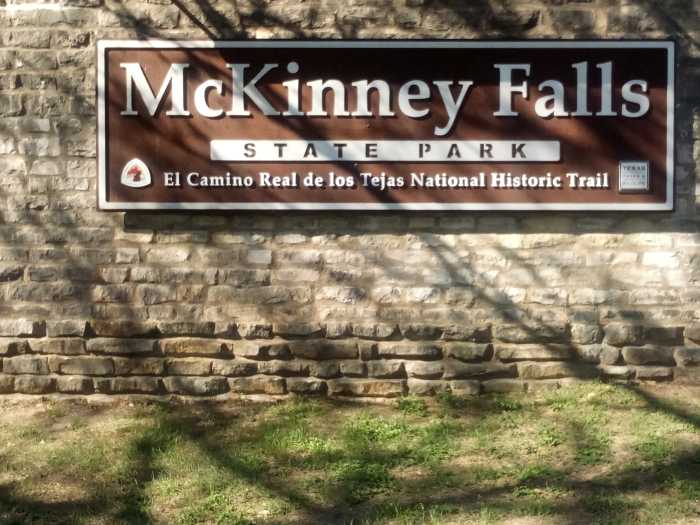
    Situated only a few miles from the airport and under 15 miles from downtown, McKinney Falls State Park is like a 700 acre oasis surrounded by urban blight. Multiple campsites and cabins are available to reserve every day right from their website, or you could pretend it is 1997 and call them. Although it can get crowded on weekends, during the week I had no trouble reserving a site only a couple of days before my check-in.

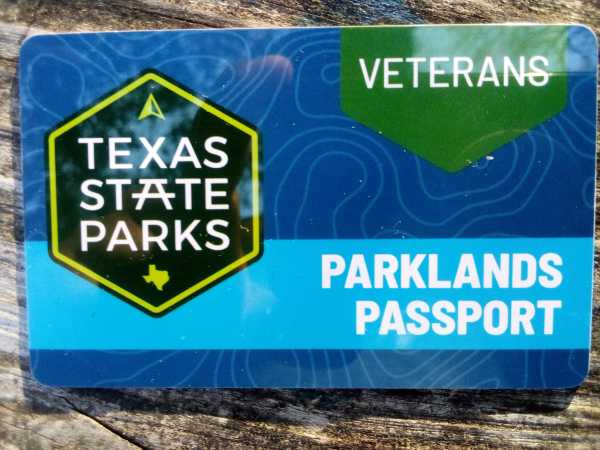
    I hiked up to the main gate and they handed me some maps and showed me where my camp was located. A spot with some flat ground, electricity, water, and a picnic table runs $24 a night. And for that price you can have up to eight people and two cars stay there. A great deal in my opinion. A day pass to just hang out in and around the park costs $6. However I didn’t have to pay that because I acquired a free Parklands Passport due to shamelessly cashing in my veteran status.

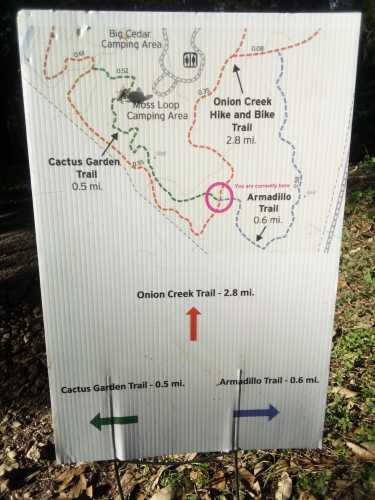
    McKinney Falls has a huge tangle of different trails, and I figured I would try a couple of smaller ones before hitting my campsite. Armadillo Trail and Cactus Garden Trail both branch off from the main trail, Onion Creek Trail, and are about a half mile long each.

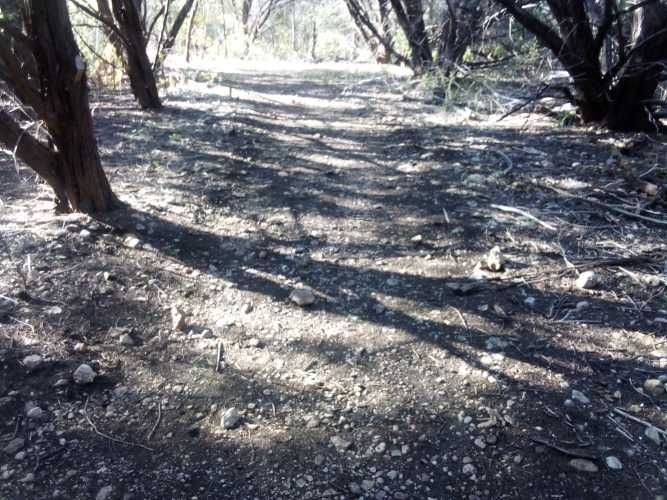
    Both trails were unpaved and had loose rocks strewn about, exactly the kind of trail I want to find more often.

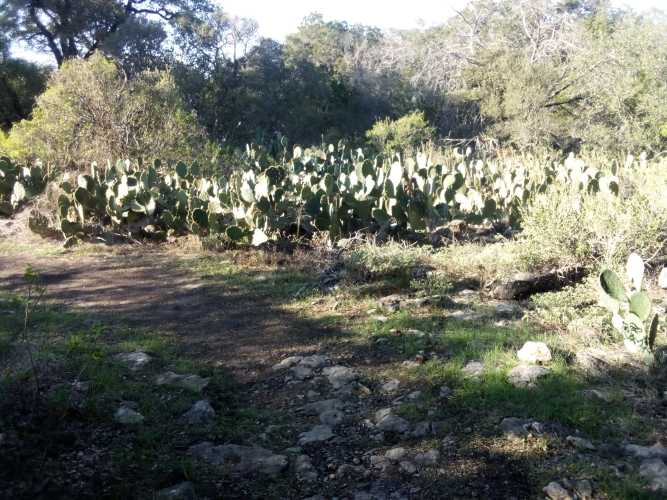
    I didn’t have to traverse Cactus Garden for long before finding out why it has that name.

    That many prickly pear cactus can lead to an unlimited supply of bloatfly sliders. Sadly, there were no armadillos on Armadillo Trail, before you think to ask.

    Onion Creek Trail is the main trail that goes around most of the southern portion of McKinney Falls. It is paved and accommodates bicycles and all that sort of stuff. If McKinney Falls is an organism, Onion Creek Trail would be its aorta.

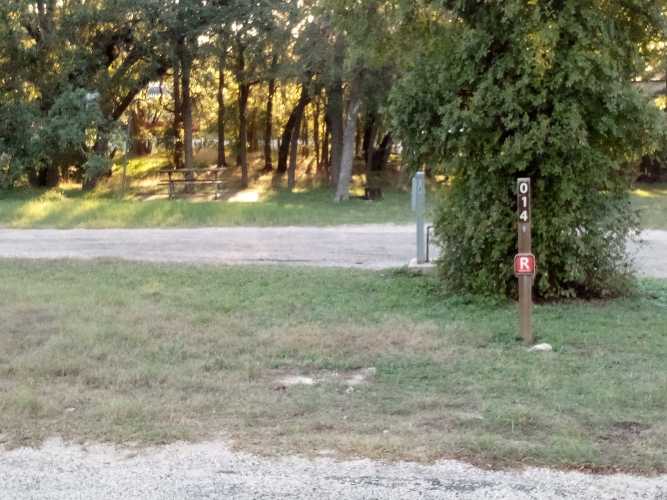
    As nightfall approached I finally made my way to the spot I would be calling home. As promised, it was essentially what I described above. The bare necessities. If you consider electricity a necessity, which might be the case in 2026.

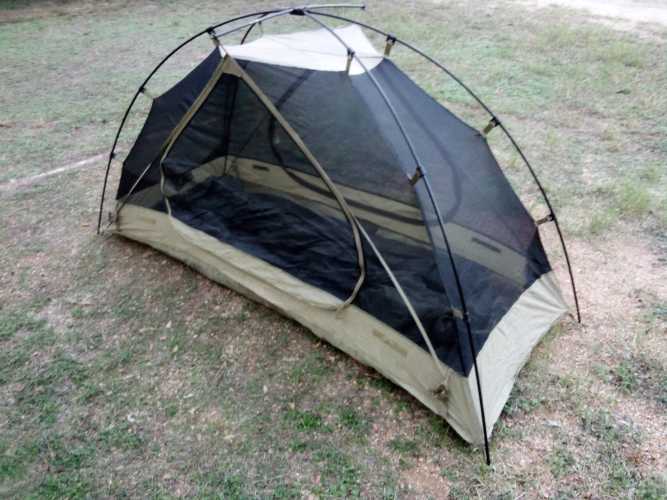
    My main reason for coming here in the first place was to stress test my gear, so the first thing I did was get my tent set up. Since it was a clear, cloudless, windless night I decided to forego my rainfly.

    Once I got the tent set up and had some of my humanitarian daily ration, there was nothing left to do but wait for sleepy time. Sitting at my campsite at dusk I was overcome by memories of being a kid and enjoying many an early autumn evening just like this one forty odd years ago. All that was missing was a bunch of fireflies. And my family.

    Not setting up my rainfly turned out to be a bad idea. I had left my bulky winter sleeping bag at home and only had my lighter one with me. I didn’t freeze like a meat pop but I definitely felt my toes get noticeably cold during the last few hours before sunrise. It only got down to the mid 50s too, so I need to carry my bulkiest sleeping bag and use my entire tent whenever I go out from now on.

    One thing I was worried about was whether or not I needed a sleeping pad. I had not planned on buying one and never needed it. I don’t have or plan to get a pillow either, and the night at McKinney Falls justified that decision as well.

    Now seems like as good a time as any to talk about my backpack. I am using a 60 liter pack I bought from Walmart. That makes not bringing my warmest sleeping bag even more annoying, I absolutely had room for it and just left it at home because I’m lazy. This pack is great so far; it fits me well, is adjustable, has tons of pockets, and cost well under $100. I might make a post about it later, it’s that awesome.

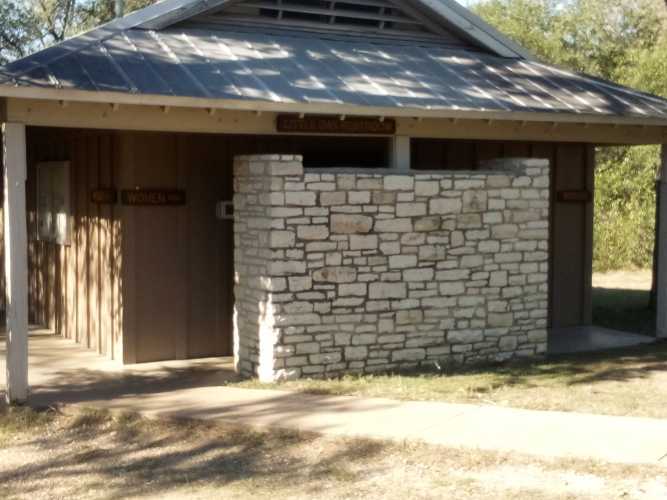
    Once I woke up and packed up it was time to head out. I cleaned up a little at the cabin that acted as a shared bathroom for all the different camps in the area. The bathroom was incredibly clean and had more than enough toilet paper. Perfect time for a gallery.

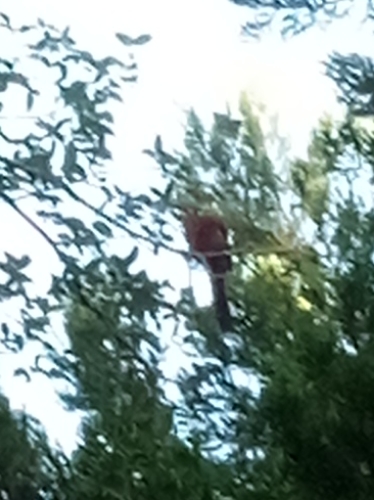
    I spent most of the morning meandering around along Onion Creek Trail with no particular purpose. That wound up being a great thing because it led to some pictures of some northern cardinals.

    These are obviously not great pictures, but you know to expect that by now. Maybe once winter comes and all the leaves fall from the trees the birds will stop hiding behind them so much. Just trust me, those red patches in the shots above are cardinals.

    Now for some facts about northern cardinals. Their scientific name is Cardinalis cardinalis. When an animal has the same genus and species name it is called a tautonym. There are, surprisingly, a lot of animals that are tautonyms. Here is a small sample of some of my favorites:

    • Gorilla gorilla (Western gorilla)
    • Dives dives (melodious blackbird)
    • Iguana iguana (American iguana)
    • Anthrax anthrax (bee fly)
    • Lactarius lactarius (False trevally)

    False trevally is a pretty interesting story. It is a fish that looks like a trevally, but is not actually related to them. It belongs to an entirely different family (Lactariidae) of which it is the only member. And yes, I am aware that whole story has nothing to do with cardinals.

    The northern cardinal is the state bird of seven U.S. states, more than any other bird. They are also very defensive, known to attack their own reflection in a window. Maybe that is why so many teams use them as a mascot. Cardinals also love eating sunflower seeds, so you should use them in your feeder. Maybe I need a feeder, maybe then birds wouldn’t actively avoid me while my camera is in my hand.

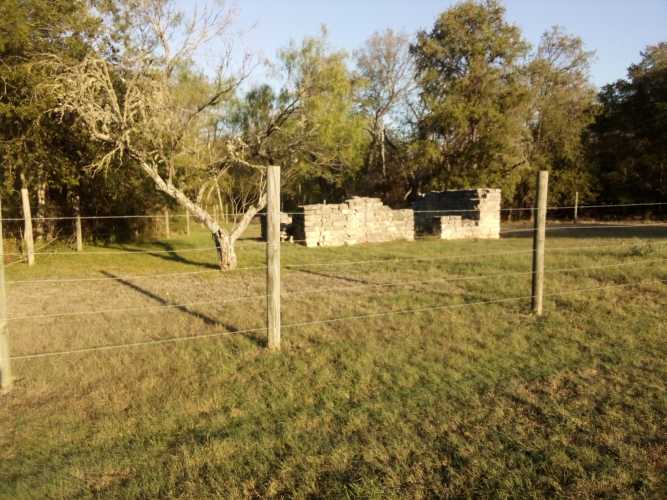
    I also saw the remains of this old horse trainer’s cabin. Now is the portion of this post where I regale you with a tiny bit of central Texas history. McKinney Falls is named for Thomas McKinney, who built his homestead there in the mid-nineteenth century. McKinney was a businessman and entrepreneur who helped fund the Texas Revolution in 1835-36. He then became a politician and served in the Texas House of Representatives. He enjoyed raising and riding horses, which explains the horse trainer’s cabin on his property.

    McKinney sided with the Confederacy during the Civil War and ultimately got ruined when the South was defeated. He lost his fourteen slaves, which made it way harder for him to raise and train horses. That’s a shame. Anyway, he died in debt and in 1976 his old stomping grounds became a state park.

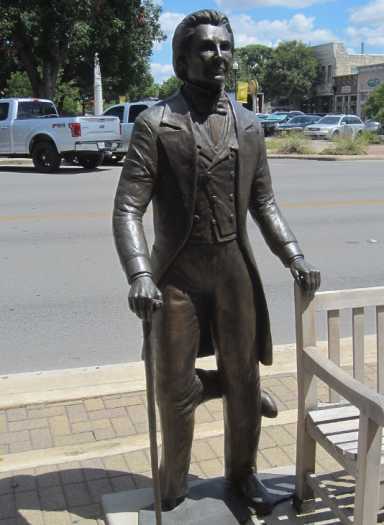
    McKinney’s homestead sat at the confluence of Onion Creek and Williamson Creek. Williamson Creek is named for Robert McAlpin Williamson, who is also the namesake of Williamson County, which sits immediately to the north of Travis County. A noted jurist and politician, Williamson was reportedly the first white man to ever learn to play the banjo. He was also known as “Three-Legged Willie” because of his enormous schlong. Okay, actually it was because he used a prosthetic wooden leg due to a childhood illness. You can see why he got the name if you check out his statue in Georgetown.

    But never let the truth get in the way of a good story. For all we know, he was packing some epically oversized man-meat. Everything is bigger in Texas after all.

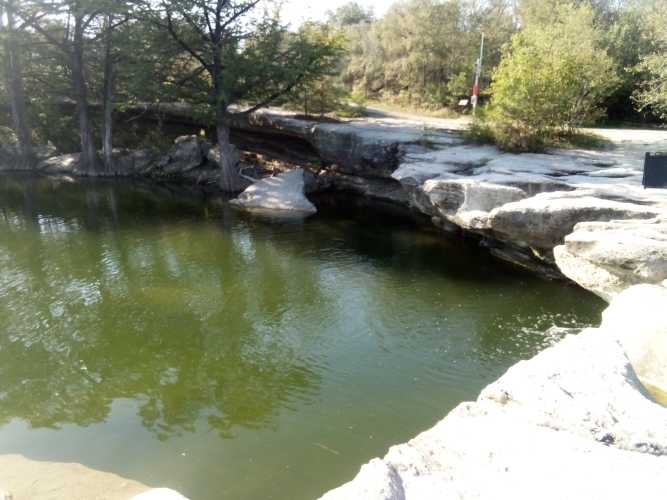
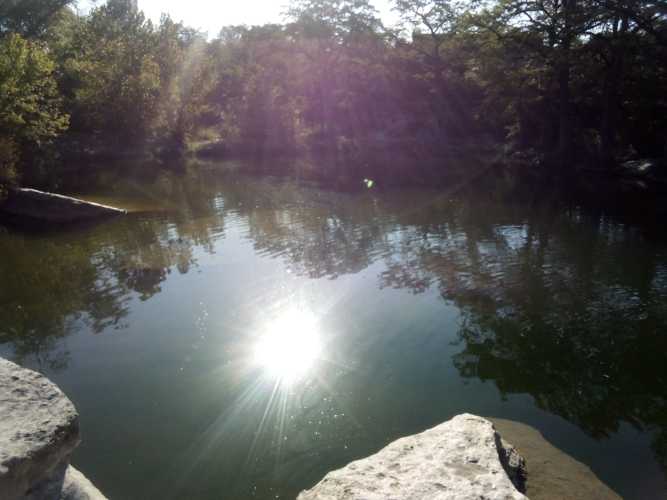
    I got some nice shots of the creek as well as a shot of a golf course on the other side of the creek from the park. I probably wasn’t supposed to go onto the golf course, but I am a rebel like that.

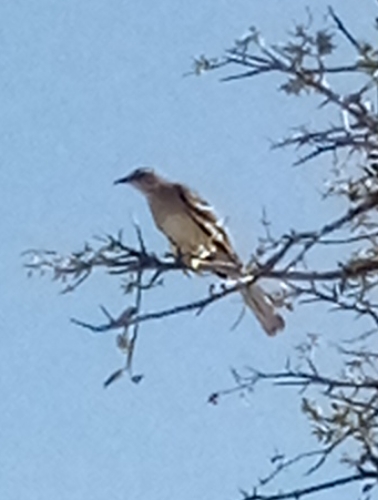
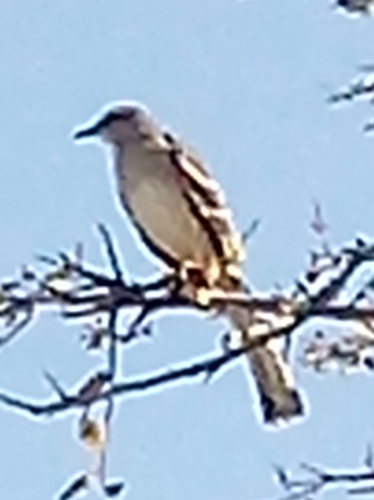
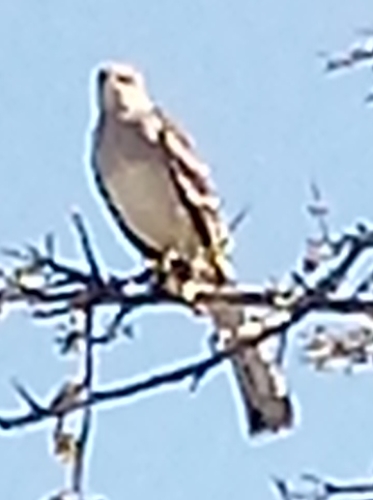
    Lastly, as I was getting ready to hike out I caught a massive break from the universe. This one bird just decided to plop down on the top of a tree right next to me. Right at the top where no branches or leaves could block it. And it just sat there and let me take picture upon picture of it. This little birdie definitely wins star of the show for the entire trip.

    I am not 100% sure, but I’m reasonably comfortable saying this is a northern mockingbird. That is the official state bird of six states, second most in the USA. In addition to mimicking other birds, they can also imitate frogs, toads, and music. As far as diet, they prefer insects and fruit.

    I had the good sense to know when I was ahead and quickly leave the park after that. I’m pleased as punch with how all my gear held up over the weekend. Eager to try another overnight in colder conditions or maybe even rain to test my gear, and myself, even more.

  • (Keep Feeling) Flocculation

    The latest aspect of hiking and camping that I have been spending way, way too much time researching is water filtration. I need to decide on which brand and what size of filter to purchase. However, while comparing different products, I got sucked into a rabbit hole while looking at one particular product.

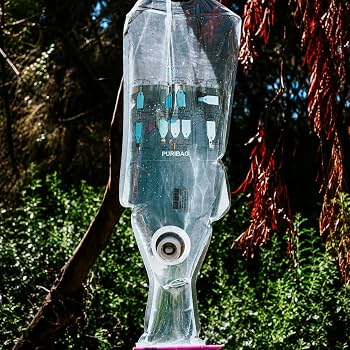
    Puribag is a water purification system that purports to take the dirtiest, most rancid water you will ever hope to find, and somehow render it potable. The way it works is you full this giant 2.5 gallon (10 liter) bag with the water and then dump in a purification packet and shake vigorously for 5 minutes. Then you hang the bag from a tree or something. After 30 minutes the impurities in the water clump together and sink to the bottom of the bag. Once that happens you clip the debris to segregate it from the rest of the clear water and dump it out. Then you can open the tap and drink it or use it to cook with or whatever you want to do with it.

    The rabbit hole I fell into was researching how the system works. I mean, I know how it works. I just described it. I mean how the how part works. What exactly is the purification packet? How does the packet make the dirty part of the water clump together like that? How does it know? Magic, or science, or a little bit of both? To answer those questions we have to dig a little deeper into how drinking water is processed and the power of inorganic chemistry.

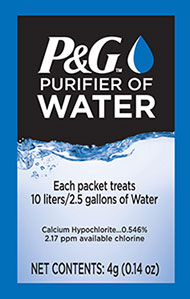
    The first thing you notice when you look at the front of the packet is that it contains calcium hypochlorite. But that wouldn’t have any role in causing the clumping of material we see in the video above. The second thing you notice on the front of the packet is the amount of calcium hypochlorite, 0.546%. In other words, 99.454% of this stuff is something other than calcium hypochlorite. What is that something else? We need to look elsewhere for the answer.

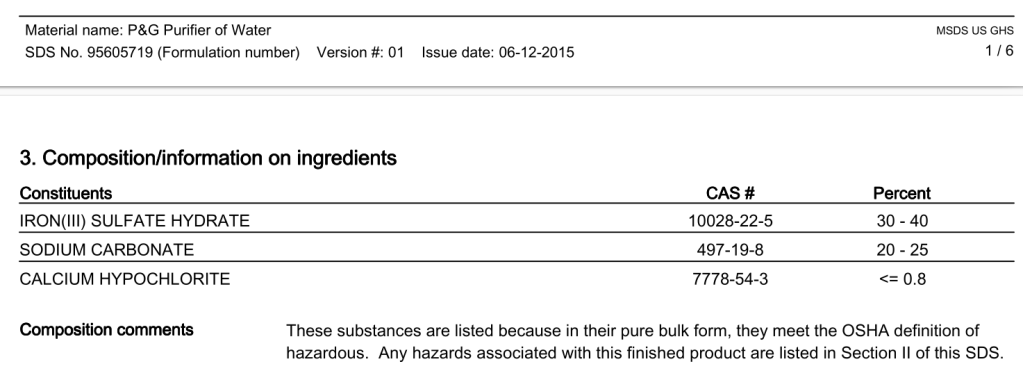
    Fortunately, I found a safety data sheet (SDS) for the P&G purifier of water online. It shows that 30-40% of what’s in the packet is iron(III) sulfate hydrate, also called ferric sulfate. The ferric sulfate is the secret sauce that does most of the heavy lifting. The 20-25% sodium carbonate in the packet keeps the overall pH within an optimal band to allow the magic to happen.

    When ferric sulfate is added to water the first thing it does is dissociate into positive ferric ions and negative sulfate ions. Since water is highly polar, particles suspended in it tend to be negatively charged. This negative charge electrostatically repels the particles from each other and is one big reason everything dissolves in water so well. The ferric ions adsorb to these molecules and neutralize their charge, allowing them to coagulate.

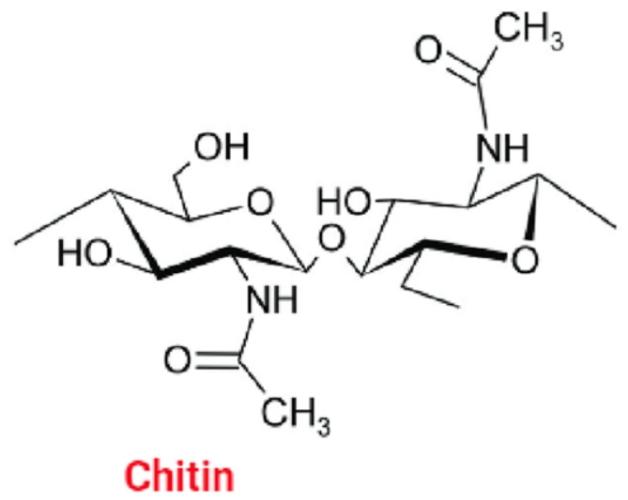
    At this point we need to go back to that snapshot from the SDS. Notice how the combined weights of the iron sulphate, sodium carbonate, and calcium hypochlorite only equals from 50-65% of the total mix. That’s because the SDS will only include potentially hazardous materials. A quick read of the patent application for the P&G purifer of water tells us that it also contains materials like chitin, clay, and cellulose. These ingredients will aid in flocculation.

    Flocculation is the fancy term for the aggregation and sedimentation of particles from a colloid. To dumb that down another couple of grade levels, it is when a bunch of tiny stuff in a suspension clumps together and slowly falls out of solution. The flocculants from the previous paragraph are mostly water-insoluble and comprised of polymers that give them a large size. As such, they can sweep through the water like big sails and present attachment points for the coagulated particles.

    As coagulated particles combine with flocculants, they form “flocs”. Flocs get bigger and bigger as they join hands with more and more particles and other flocs. Eventually the flocs become so big that their density causes them to sink to the bottom of the bag.

    After this step most of the foreign organic and inorganic matter has been removed from your water. This includes heavy metals like arsenic, as well as parasitic cysts such as Cryptosporidium parvum. Once all this stuff has precipitated out, the calcium hypochlorite gets its turn to shine.

    The only ingredient actually listed on the front of the packet is used as a disinfecting agent. It is coated with a hydrophobic material like wax, so that it does not release as soon as it gets added to the water. It bides its time for the first five or ten minutes and then enters the fray to take care of bacteria and viruses only after everything else has been successfully bound. The majority of the 30 minute wait time is to allow this critically important step to complete.

    Once the debris gets dumped from the Puribag the water is ready to be enjoyed. The final step is passing it through a filter on the spigot. That filter is a 0.1 micron hollow filter using activated carbon from coconut shells. Yes, you read that correctly, coconut shells. The preparation of shells to transform them into usable filters is also a multi-step process.

    First, the inner portion of the shell is separated out and then it is cleaned, dried, and crushed into small pieces. The pieces are then heated at hundreds of degrees in a low oxygen environment in a process called pyrolysis. After pyrolysis the coconut shells transform into charcoal. Then the charcoal is activated with steam to open additional pores in the carbon. Once activated, the extra pores create untold surface area on the charcoal. One teaspoon of which can contain as much area as a football field. This large surface area adsorbs any molecules that might still be left in your treated water. Chiefly, it will capture molecules that might have unpleasant tastes or odors. The extraordinary adsorptive properties of activated charcoal are why it is used to treat poison victims. The charcoal can compete to suck up the poison before all your squishy and important vital organs do.

    This water purifying technology is not really very applicable to hiking. Rarely would you ever need to purify 2.5 gallons of water at once, unless you were responsible for getting potable water for your whole tramily. It is definitely possible to purify more water than you need at once and carry it around with you. Keeping in mind that water weighs approximately 8 pounds per gallon, you are talking about up to 20 extra pounds in your load. Not something most people would willingly agree to when life straws, one liter purifiers, and boiling exist.

    Camping is a fantastic use for this product. You can set up camp and get a couple gallons of water ready within an hour. But you know who really makes great use of the purifier of water packets? Third world countries.

    Here is another video that includes an interview with the inventor of the purifier packets. He talks about the three-step process of coagulation, flocculation, and disinfection (starting @ 3:41). Fair warning, this video does contain a jump scare with admitted adulterer and Epstein associate Bill Gates @ 5:25.

    Phil Souter was in laundry research in the 1990s when he came up with the idea that would become the P&G purifier of water. That satchet makes it possible to generate 2.5 gallons of clean water from inputs of dirty water, a bucket, a spoon, and a cloth to use as a makeshift filter. Dr. Souter received an Order of the British Empire for his work. P&G helped establish Children’s Safe Drinking Water, a charitable arm that gives away purifier packets to communities in need of them. They have worked to clean over 25 billion liters of water around the world.

    I spent a fair amount of time in this rabbit hole, reading patent applications and scientific papers, just because I found the story so enthralling. The science underpinning it is intriguing as well. In the words of Marge Simpson, I just think they’re neat! Now I need to get back to analyzing the different trade-offs between LifeStraw and Grayl.

  • Of Course I Went To Houston To Watch The White Sox In The Postseason

    Of course I went to Houston to watch the White Sox in the postseason. And of course that has nothing to do with preparing to hike the Appalachian Trail. But I won’t let that stop me from telling you all about it.

    My “rich friend” from Houston, who I mentioned in my post about Austin FC, and I decided to blow some money on tickets and play hookey to watch game 1. So as soon as the games ended on Sunday we bought two tickets for Tuesday’s game with the 4pm local start time.

    We drove to Houston the morning of. On the way we stopped at Weikel’s Bakery in La Grange. I got a pastrami sandwich that I ate half of immediately and saved the other half for later. Traffic was as calm as you’d expect while driving in the middle of the day, up until we got to just outside of Houston. To no one’s surprise, everything became congested and cray once we hit H-Town.

    I do not currently own a car and I have not for most of my life. I bought my first car my senior year of high school and continued using it for the next few years. I owned another car when I lived in Las Vegas for three years. Aside from that I have driven various rental cars for both work and pleasure all over the country. A few of those occasions have been in Houston, but not very many. I would say I’ve driven for less than two weeks of my life there.

    I say all of that to really impress upon you the idea that I am by no means a person with tons of experience driving in Houston. I have seen a person go from the far left lane of a highway, all the way over to the right like they wanted an exit, then decide they didn’t need the exit and go all the way back to the left lane again – all without ever coming close to using a turn signal – only twice in my life. Both of those times were in Houston. Every city likes to be cute and say their drivers are the worst. In Houston, the difference is that it is true.

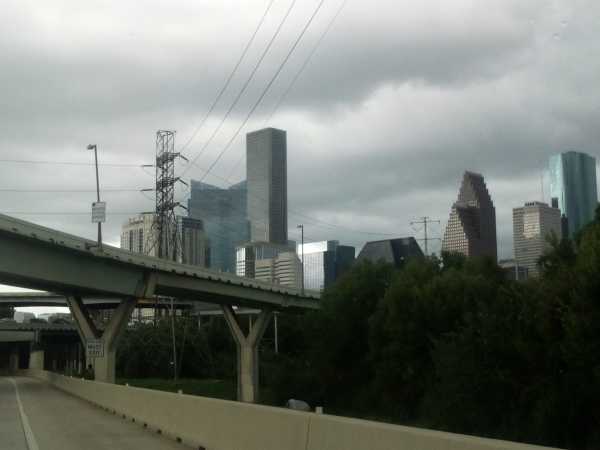
    After slowly creeping along in traffic for much longer than was necessary, we got to downtown. This allowed us to begin our next grand adventure: the quest for affordable parking. Spoiler alert, we failed. After passing places with extravagant $40 spots we settled on one for a mere $25 about a mile away from the stadium. I ate the second half of my sandwich as we walked to the gate.

    Getting inside was hassle free since we showed up about 90 minutes before first pitch. We had time to hit the team store, since my friend wanted to procure a division champs T-shirt. Since the shirts were made by Fanatics they were all cheaply constructed and looked at least a full size too small. The store itself had pretty much everything you could ever dream of with an Astros logo on it. They even had sugar skulls for the Halloween season.

    We stopped by concessions and when I saw that a 16oz Modelo was $21.99 my eyes nearly popped out of my head like an aforementioned sugar skull. We stopped and looked longingly at El Tiempo margaritas with similar results. I decided to forego alcoholic refreshment and just use my fandom to keep myself hydrated.

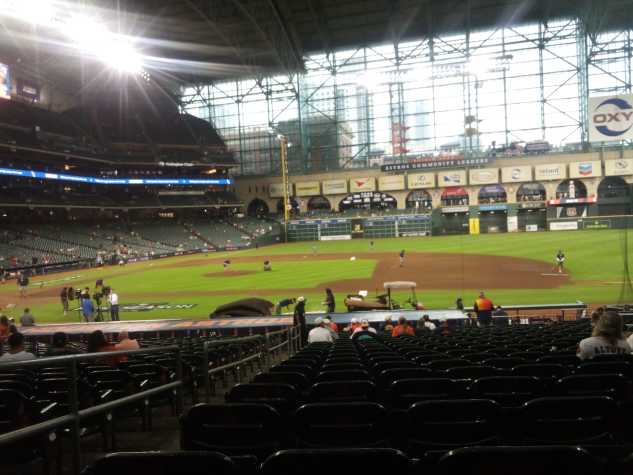
    By this point there was nothing left to do but go to our seats. My friend insisted we spend big and sit behind the Astros’ dugout. I whined at the beginning, but had to admit that the location was very nice once I sat down.

    What was not nice was the fact that the Wifi could not handle the crowd for some reason and we had trouble streaming the end of the Braves-Phillies game on our phones. We were able to catch replays of the Austin Riley homer after the fact.

    Pre-game festivities included player introductions. Sam Antonacci was the first player introduced and promptly tripped on the top step of the dugout. That may or may not have been planned. Later was the national anthem sung by no other than Christian Walker, who then immediately went to take his position in the field at first base.

    First pitch

    Once the game started, the South Siders jumped out with one run in the first. However we left some meat on the bone and left runners on first and second. The lead increased to 5-0 after three consecutive singles in the fifth. Despite that, Pale Hose fans felt pangs of regret because we were constantly leaving runners on base.

    In between innings we were entertained by the Coca-Cola Shooting Stars. The dance troupe that was trying to hype up the crowd by throwing T-shirts in our general direction. Of course, they were all attractive young ladies. Of course, I took a picture. Of course, it was blurry.

    A two-run homer by Houston in the bottom of the fifth tightened up the game, but they never got closer than three runs. Grant Taylor worked the final 2.1 IP to get the save in a 6-3 victory. As we were leaving I got several fist bumps and high fives from other Chicago fans who had made the trip. Our mantra was simple. The win is sweet, but the job is not finished. The next day Chicago completed the sweep.

    There have been several news stories about the crowd. Since I was part of the crowd, I feel qualified to talk about it. Yes, the Houston fans booed their team lustily. It was deserved. The White Sox got the leadoff man on in six of the first seven innings of game 1. They became the first team in MLB history to ever lead after every single inning of a multi-game postseason series.

    I believe purchasing a ticket gives you to right to boo for any reason you want. If the team is playing poorly, that is a great reason.

    I know people also had issues with the size of the crowd and insinuated the Houston fans were complacent with all the winning they have done over the last decade. Yes the crowd was smaller than expected. But that was driven by the fact this was a Tuesday afternoon game played with under 48 hours notice as much as any other reason. Not everyone was in a position to blow off work for game 1 of the first of four possible postseason series. When you keep adding layers to your postseason you get a diminishing return as far as interest and ticket sales go.

    The fans that were in Daikin Park were passionate and cheered wildly whenever the team on the field gave them a reason. There just weren’t that many reasons. It is weird to hear the players claim to be disappointed in those fans. Especially when those same fans bought an awful lot of overpriced Modelos, nachos, and parking spaces to come to the game.